I wasn't sure what to do, and I didn't want to type a looooong blog post, so I decided to write a haiku that represented my high school for me.
The morning sunrise
Drifting away till sunset
Angst, Despair, Complete
(This was harder than it looks, coming up with the right words and making sense with those words)
Sunday, April 24, 2016

Sunday, April 10, 2016
Whitman Journals
The first thing I noticed is that Whitman had very bad handwriting. It is difficult to read what he has written, but there is a considerable amount that is legible. There were few references of the word liberty (I believe it says "Libertad"), and Christ. Looking further into his journal, I was rather amazed by the drawings. I believe most of them are drawings of Whitman himself, just with a different pose or accessory(i'm referencing the hats). There was also this strange drawing of what looked like a stick figure angel with a skull face and a torso shaped like a heart. This journal reveals a little more about Whitman's character. It shows us that he really does care about other people, and this caring nature extends to his political views (mentioning liberty so much). On that same note, it shows his interest perhaps in politics and government because he also mentions "the old England" and the queen of England when he talks about liberty. Additionally, I believe the drawings reveal, to some extent, Whitman's vanity. Whitman does refer to himself a number of times in his poems, and the drawings are a reflection of this self appreciation.
Walt Whitman's actual note transcripts show that he was actually interested in politics. Specifically, he fancied president Lincoln and tried to meet him many times. Essentially, a large portion of his journal referenced a presidential race, which further shows his devotion to his community not only as a source of compassion, but also information. Whitman's journal really helps us understand more about his beliefs and who he really is. As I mentioned earlier, there is a reference to Christ in the journal, and this is related to an entry about religion, and the value and meaning it holds to Whitman. Ultimately, Whitman's journal does more than just show us how creatively he thinks or his thought process while he brainstorms. Instead, it reveals just who Walt Whitman is in a way that is a lot more unique and direct than it being told by another person.
Walt Whitman's actual note transcripts show that he was actually interested in politics. Specifically, he fancied president Lincoln and tried to meet him many times. Essentially, a large portion of his journal referenced a presidential race, which further shows his devotion to his community not only as a source of compassion, but also information. Whitman's journal really helps us understand more about his beliefs and who he really is. As I mentioned earlier, there is a reference to Christ in the journal, and this is related to an entry about religion, and the value and meaning it holds to Whitman. Ultimately, Whitman's journal does more than just show us how creatively he thinks or his thought process while he brainstorms. Instead, it reveals just who Walt Whitman is in a way that is a lot more unique and direct than it being told by another person.
Sunday, March 6, 2016
Lost In Translation
#1:As Gregor Samsa awoke one morning from uneasy dreams he found himself transformed in his bed into a gigantic insect.
diction (connotation/denotation): simple and straightforward. The use of "gigantic" adds some extremity.
- syntax: Lack of punctuation except the period at the end of the sentence. No pauses in sentence
- imagery/details: Imagery is created with the use of the descriptive words "uneasy" and "gigantic"
- structure: The sentence begins with "as," so the reader is already placed into the action. The lack of punctuation also adds to this effect, by making this action seem instantaneous.
#2:Gregory Samsa woke from uneasy dreams one morning to find himself changed into a giant bug.
diction (connotation/denotation): Also simple. Uses slang- "bug"
- syntax: Also lack of punctuation
- imagery/details: not much detail. Seems abbreviated- Removes the part about being in bed. Also changes Gregor to Gregory
- structure: shortened from the original(also shorter when compared to other translations)
#3:When Gregor Samsa awoke from troubled dreams one morning he found he had been transformed in his bed into an enormous bug.
diction (connotation/denotation): More serious. The words "troubled" and "enormous" add a little more drama and negativity to the situation. Also uses the slang term "bug".
- syntax: Again lack of punctuation, but it seems like there should be a comma after "morning" (I paused at this point)
- imagery/details: Strong imagery created using "troubled" and "enormous." Made me think of a big spider.
- structure: Events told in the past. Lack of punctuation creates a sense of wordiness.
#4:One morning, upon awakening from agitated dreams, Gregor Samsa found himself, in his bed, transformed into a monstrous vermin.
diction (connotation/denotation): simple and straightforward. The use of "gigantic" adds some extremity.
- syntax: Lack of punctuation except the period at the end of the sentence. No pauses in sentence
- imagery/details: Imagery is created with the use of the descriptive words "uneasy" and "gigantic"
- structure: The sentence begins with "as," so the reader is already placed into the action. The lack of punctuation also adds to this effect, by making this action seem instantaneous.
#2:Gregory Samsa woke from uneasy dreams one morning to find himself changed into a giant bug.
diction (connotation/denotation): Also simple. Uses slang- "bug"
- syntax: Also lack of punctuation
- imagery/details: not much detail. Seems abbreviated- Removes the part about being in bed. Also changes Gregor to Gregory
- structure: shortened from the original(also shorter when compared to other translations)
#3:When Gregor Samsa awoke from troubled dreams one morning he found he had been transformed in his bed into an enormous bug.
diction (connotation/denotation): More serious. The words "troubled" and "enormous" add a little more drama and negativity to the situation. Also uses the slang term "bug".
- syntax: Again lack of punctuation, but it seems like there should be a comma after "morning" (I paused at this point)
- imagery/details: Strong imagery created using "troubled" and "enormous." Made me think of a big spider.
- structure: Events told in the past. Lack of punctuation creates a sense of wordiness.
#4:One morning, upon awakening from agitated dreams, Gregor Samsa found himself, in his bed, transformed into a monstrous vermin.
diction (connotation/denotation): Higher level of formality than the other translations.
- syntax: Only translation that uses punctuation. Breaks up the sentence into different parts- makes it easier to follow and understand
- imagery/details: Word choice plays large role in creating imagery. Unlike the other translations that said that use a synonym of big to describe the bug, this translation uses monstrous. This effects the way the reader perceives Gregor's transformation.
- structure: the separation of the sentence makes it seem more dramatic
- syntax: Only translation that uses punctuation. Breaks up the sentence into different parts- makes it easier to follow and understand
- imagery/details: Word choice plays large role in creating imagery. Unlike the other translations that said that use a synonym of big to describe the bug, this translation uses monstrous. This effects the way the reader perceives Gregor's transformation.
- structure: the separation of the sentence makes it seem more dramatic
After analyzing each, respond to the following questions in a well-developed (2-3 paragraphs) response- think about the translations as a whole: How does the word choice, syntax, punctuation, and imagery shift in each affect meaning? Is one more effective than another? Why? What does this exercise bring up about the difficulty of reading translated texts? How do different translations effect the tone of the sentence?
The word choice, syntax, punctuation, etc. affects the meaning because it changes what information the reader interprets. For example, the words "uneasy" and and "bug" used in the second translation gives a lighter impression on the reader than "monstrous" and "vermin," which sound intense and horrific.I think that the fourth translation is the most effective because it relates better to Kafka's emphasis on absurdity absurdity of existence, the conflicts that come with authoritarian power, and the alienating experience of modern life. The other translations seemed animated in the way they describe Gregor's transformation. However, in the 4th translation, the description of Gregor as a "monstrous vermin" makes the situation more serious and attention grabbing.
The difficulty with reading translated texts is that there are many ways to translate an original text, and each translation will have a slightly different meaning. Unfortunately, this takes away from the author's original intentions because the reader is reading the translator's interpretation of the text. Another difficulty that comes with translation is that there are some words or phrases that have no direct English translation, so the translator is has to adjust certain words that can have an affect on the overall meaning of the text. Tone is essentially created by the way a character or narrator responds to his/her current situation. The different translations affect the tone by changing the focus is during that situation, or the words used to describe the situation.
Sunday, February 21, 2016
Practice IOC
Criterion A: 5/10
I believe that I showed my knowledge adequately. I provided context for my passage, and historical context for the novel. I also referenced the passage and other points of the novel.
Criterion B: 4/10
I only analysed one literary feature, but I think I did a good job explaining how it connects to the novel and also how it effects the reader.
Criterion C: 3/5
I feel that my organization was fair. I tried to connect each point I was making so that my analysis would flow better. I also made sure to refer to things I previously said in order to provide clarity.
Criterion D: 3/5
I believe my language was adequate. I didn't use as much subject specific vocabulary, but my vocabulary was focused and consistent.
Link to Practice: https://drive.google.com/file/d/0B5aHkj51XkZBTEJWcnZVT3RXZDA/view?usp=sharing
Passage:

I believe that I showed my knowledge adequately. I provided context for my passage, and historical context for the novel. I also referenced the passage and other points of the novel.
Criterion B: 4/10
I only analysed one literary feature, but I think I did a good job explaining how it connects to the novel and also how it effects the reader.
Criterion C: 3/5
I feel that my organization was fair. I tried to connect each point I was making so that my analysis would flow better. I also made sure to refer to things I previously said in order to provide clarity.
Criterion D: 3/5
I believe my language was adequate. I didn't use as much subject specific vocabulary, but my vocabulary was focused and consistent.
Link to Practice: https://drive.google.com/file/d/0B5aHkj51XkZBTEJWcnZVT3RXZDA/view?usp=sharing
Passage:

Sunday, February 7, 2016
Never Let Me Go
- What similarities and differences do you find? Speculate on the reasons for the various covers.
One clear similarity between each cover is that the font of each matches the background. For the top left image, this was done by changing the color to a yellowish green color to match the leaves and grass. For the top right image, this was also done by changing the font color. The top author text is black to match the core of the hair of the faded figure, and the title text is dark brown to match the outer parts of the figure's hair. For the bottom left image, the illustrator uses the same font color(white) in different parts of the cover, and also a yellowish tan color towards the top in order to match the background sky. For the bottom right image, the font type matches the background drawing in both the color and the crookedness/sketchiness of the lines.
A major(obvious) difference is what is portrayed in the background. The top left cover has a photograph of a young woman. The top right cover has a watercolor or pastel drawing of a young girl. The bottom left has a photograph of one boat, and the bottom right has a diagram of a human body with its organs.
Each cover is suggestive of a different aspect of the novel. The use of light, earthy colors in the top left cover, along with a young lady that appears to be alone and reflecting, hints at the blissfulness of self reflection and reminiscing. The blurry/rushed pastel drawing of a young girl on the top right cover, suggests a similar idea. However, the fade of that drawing suggests the fleeting of memories, or events that took place as children. The lonely boat on the bottom left cover hints at individuality, or the lack thereof in the novel. The ominous drawing of the human figure and organs on the bottom right cover expresses the horrific or darker aspects of the novel.
- After briefly comparing and contrasting all four covers, choose two to examine more closely:


Perhaps the only similarities between these two covers is that they both have the title and the author of the novel, and that they include some sort of a human figure. However, there are various differences, including:
The background color of the covers- the cover on the left is very dull with varying shades of gray, while the cover on the right is lively with bright olive green, yellow, and red.
The illustrated figure- The left cover shows the upper half of a body, and the internal organs, and the right cover shows a young woman in a field of plants and flowers
The amount of details- The left cover has "cartoon quality" , with overlapping and crooked lines, while the right cover is an actual photograph of a young woman.
The font- The left cover has a cryptic or mysterious font. It seems almost like the font of a horror movie. The right cover has a much more serene font; one that is not too particular to stand out.
The reasons each illustrating company, artist or whoever created the covers, created them based on how they viewed the novel. Likely, the illustrator that created the left cover viewed the novel as twisted or somewhat dark not only because of the mysterious things, but also the sense of normalcy each character had towards those mysterious things. The illustrator on the right probably viewed the novel lightheartedly, as a nostalgic journey of a young woman. These covers could also represent how the illustrators wanted the readers to view the book. The illustrator on the left would want the reader to be aware of the mysterious and creepy elements of the novel, while the illustrator on the right would want the viewer to notice the blissful nature of past memories.
As far as cultural construction goes, I can only see it within the left cover. The novel itself was created at a time when cloning and genetic modification was a very controversial issue. It was essentially a 'hot topic' in the media. The left illustrator seems to be showing his belief (discontent, fear, etc) about something that many others believe is acceptable.
Sunday, January 24, 2016

Sunday, January 10, 2016
Double Indemnity
Film noir literally means "black film."As you are
watching the film, keep track of all the elements in the picture that seems
dark or depressing. Think about the characters, the setting, and the story
line.
Phyllis Dietrichson
There is no doubt that the plot of
double indemnity is filled with "black" or cynical motifs. First and
foremost, Phyllis Dietrichson, the wife of a wealthy, much older man was
sexually objectified by the role she played in the film and the relationship she
had with other characters. She is obviously a beautiful woman, not much older
than her stepdaughter, and does not have a true intimate or affectionate
relationship with her husband. This becomes more apparent when she plots to
kill her old man in order to collect insurance money. Another impurity of
Phyllis' character is seen towards the end of the film, when Walter finds out
that she had been manipulating him. During the entire operation, Walter thought
that he was the one in control, and was willing to do anything to properly
execute the plan. However, Walter was only a pawn in Phyllis' chess game. She
was only using him to ensure a free and luxurious life, and did not intend on
sharing this with anyone.
Mr. Dietrichson
Early on in the film, it is easy to see that Mr. Dietrichson's reason for marrying Phyllis was a superficial attraction to her looks. He didn't respect her much as a person, often beating her whenever she did something that didn't please him. He also placed the interests of Lola, his daughter, well above those of Phyllis, and in the case of his death, Lola would collect all the money, and Phyllis will be left penniless. The sad truth this is that Mr. Dietrichson couldn't care less what happens to his wife. In his mind Lola is his only family because she is his flesh and blood. She is nothing more that a doll, or expensive accessory to be shown off. When Mr. Dietrichson is no longer around to "play with her," she may as well cease to exist because he holds no intent to provide for her after his death.
Early on in the film, it is easy to see that Mr. Dietrichson's reason for marrying Phyllis was a superficial attraction to her looks. He didn't respect her much as a person, often beating her whenever she did something that didn't please him. He also placed the interests of Lola, his daughter, well above those of Phyllis, and in the case of his death, Lola would collect all the money, and Phyllis will be left penniless. The sad truth this is that Mr. Dietrichson couldn't care less what happens to his wife. In his mind Lola is his only family because she is his flesh and blood. She is nothing more that a doll, or expensive accessory to be shown off. When Mr. Dietrichson is no longer around to "play with her," she may as well cease to exist because he holds no intent to provide for her after his death.
Sunday, December 6, 2015
Recently Watched by Lady Macbeth...
Recently Watched by Lady Macbeth >
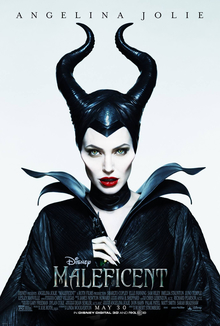


Maleficent
*****
PG 2014 - Fantasy/Action - 1h 37m
As a young woman of pure heart, Maleficent lived joyfully in a forest kingdom. When an invading army threatened the forest, Maleficent had to rise up and protect it. However, a terrible betrayal hardens her heart, and turned her into a vindictive creature. Lady Macbeth watched this movie because she admired Maleficent's self dependence. Maleficent didn't have anyone telling her what to do or how to live her life. Lady Macbeth also loved the fact that Maleficent had a large amount of power, and was able to freely impose it. This was something Macbeth had longed for, but could never attain because she was bound by the societal standards of her time.
Brave
*****
PG 2012 - Fantasy/Adventure - 1h 42m
PG 2012 - Fantasy/Adventure - 1h 42m
Merida, the impetuous, but courageous, daughter of King Fergus and Queen Elinor, was a skilled archer who wanted to lead a life that was self determined. However, her defiance of Scottish tradition angers the lords and leads to chaos in the kingdom. Lady Macbeth was thrilled by Merida's ambition, courage, and defiance. Merida set out on an adventure that was unfavorable, and even when mayhem, she stayed focused and resolved the issue. In essence, Lady Macbeth loved this movie because she saw Merida exhibit the same traits that are the build up her own character.
The Lion King
*****
G 1994 - Drama/Music - 1h 29m
This film follows the adventures of the young lion Simba, who was supposed to be the heir of his father, Mufasa. However, Mufasa's brother, Scar, tried to seize the throne by luring Simba and Mufasa into a stampede. Lady Macbeth watched this Disney classic because it reminder her of herself in two different ways. The first was Scar, who was manipulative and cunning, and gave Lady Macbeth joy in knowing that there was a character as skilled as she was in the art of trickery. The second was Simba, who appealed to Lady Macbeth's affectionate side because she could relate to Simba with a dead father.
The Little Mermaid
*****
G 1989 - Fantasy/Romance - 1h 32m
G 1989 - Fantasy/Romance - 1h 32m
Teenage mermaid Ariel was extremely fascinated with life on land, however her visits were forbidden by her father. On one of her visits, she falls in love with a human. Determined to be with her love, Ariel made a dangerous deal with a sea witch to become human for three days. Lady Macbeth loved this movie especially because of Ariel's defiance. Just as Lady Macbeth partook in a risky action in order to become Queen, so did Ariel, in order to rekindle with her human love. Lady Macbeth really admired Ariel's goal-oriented mindset, and understood the sacrifice she made.
Sunday, November 22, 2015
Power in Macbeth and Monopoly

Power In Macbeth
I think that the more power someone desires, the more corrupt actions they'll commit to obtain that power. I also think that Shakespeare would agree with this idea to a large extent because Macbeth exemplifies this exact behavior. In the beginning of the play, Macbeth was portrayed as a loyal warrior who would do anything for his king. However, when Macbeth met with the three witches who prophesied that he would be king, there was a change in his character, which with the help of persuasion from Lady Macbeth lead to the death of King Duncan. Unfortunately, it didn't stop here; since the first part of the witches' prophecy came true, Macbeth set out to kill his friend Banquo and son, Fleance in order to prevent the second part from coming true (Banquo's children become will reign). Shakespeare shows that power corrupts by using Macbeth who's craving for power results in the killing of others, and eventually his downfall.
Power In Monopoly
I don't recall too many instances where I had power over a whole country, but I do remember having power playing monopoly. When I was younger, my favorite board game was monopoly, and whenever I played with my friends, we appointed an "accountant" that passed out and collected the money whenever someone bought a house. We all knew that this was a big role that shouldn't be taken advantage of. However, back in those days, I was a corrupt official. Whenever I was the accountant, I would steal some money from the bank and put it in my stash so that I could buy all the houses and win the game (....but does anyone really ever even win a game of monopoly?) Just like Macbeth in his campaign for power, I performed corrupt deeds in order to win, and these actions were stemmed from my abuse of the sacred power of monopoly accountant.

Tuesday, November 10, 2015
Sunday, October 11, 2015
The Deadly Sins in Advertising

Author- Louis Vuitton
Date of Publication- April 1999
Place of Publication- France
Looking at the little picture...
One would see two women fighting for a handbag. Interestingly, both women seem to have on the same clothes (but different colors), the same hairstyle, the same style of make up on their face, and they look alike. The text is placed aside, in small monochromatic font, and doesn't interfere with the primary image. This seems to place the emphasis of the advertisement on the women, and their struggle for the handbag. In addition, there is an image filter, that intensifies the image by making it appear red.
Looking at the BIG picture...
One can see the persuasive techniques used by the advertising company, and how they correlate with the deadly sins of envy and lust. The fact that both women look strikingly similar, suggests that they are closely related (possibly sisters of friends). The woman on the right, seems to be the owner of the handbag because she has more possession of it, and is holding it as if she is defending her own product. The woman on the right seems as if she started this altercation because she wants what the woman on the right possesses - this shows the envy of the woman on the left. The advertising company draws on the lust of the audience by expressing that this handbag is something that they should want or buy because it's so valuable that two close friends will fight over it.
The audience-
This advertisement targets young and wealthy women. This is because the women in the image are dressed elegantly, with very fashionable clothing. They are also very polished, with their makeup and hair well done (in other words they look like models). The brand also suggest that the audience is of higher class and wealth because Louis Vuitton is a brand that sells items that reach $100,000, so it would only be logical if they were to advertise to those who can afford their products. I don't think the audience would have much cultural knowledge; rather, they would have a sense of fashion because it wouldn't make much sense for someone to spend such alarming prices on designer products if he or she wasn't either wealthy or a fashionable.
Sunday, September 27, 2015
What is Abbott's name?
The name Abbott isn't exactly a common name. It's quite different and unique and when I was younger I struggled a little with it because it was so different. It wasn't that I didn't like my name, its just that people always found a way to complicate it either with the spelling or the pronunciation. Whenever I told someone my name, they would spell it as 'Abit' or 'Abbit' or something else of that variation. Conversely, whenever I wrote my name down, they would pronounce my name as 'Aboot' or 'Abut.' I always wished for a nickname so that I could avoid this complication, but the closest I got to one was Abbott the rabbit or Ab-Lounger (the 30 minute ab workout).
I don't have a remarkable story about how I got my name, I was simply named after one of my dad's closest friends (by the way his name was Abbott). I've never thought much about the definition of my name, which means the head of a religious community of monks living in a monastery, because I don't really that definition is important. I don't really think my name defines me; I believe my morals, actions and character are what represent who I am, and my name is just what all these things are attributed to. I believe that how I am perceived or remembered isn't by my name, rather by the things I've done or the way I've acted towards a certain person.
The "two" Abbott are the Abbott at school and the Abbott out of school. The Abbott out of school is extremely goofy and funny. I mean you probably couldn't hold a conversation with me without both of us laughing in tears. This is because I've known my out of school folks for a looong time, and I'm comfortable with looking crazy in front of them. However, the Abbott in school is passive, not as funny (but still pretty funny), and a lot more serious. Frankly, I don't know why I have these two different sides, I guess it's just that I don't want to overwhelm people when I first meet them. I like to keep things "normal," until I get to know someone well. The biggest dilemma that comes from these two sides is when my school friends meet my out of school friends and I don't know which side to use in the conversation. Usually when this happens, I try to separate both friends, and talk with them individually, and if that doesn't work, I just slowly and kindly walk away from the conversation.
Sunday, September 13, 2015
Wing Young Huie & Margaret Atwood

Image Properties:
- Author- Wing Young Huie
- Date of Publication- 2012
- Place of Publication- Minneapolis, MN
What do we see from just looking at it?
At first glance, the viewer is drawn by the bright/intense red jackets of the individuals that contrasts with the lighter colors of the background. This background involves a store or supermarket, that sells both food and clothing. The next "attention grabber" in the scene would be the signs that these individuals are holding. More than likely, the viewer would be drawn to the sign on the left because the text is larger and more legible. Interestingly, as the viewer scans the sign, either during or after, they'll probably look at faces of the individuals, as well as their current location (the supermarket). At this point, the viewer then begins to conceive ideas about the message of the image. Stereotyping and victim blaming, are the explicit messages stated through the text on the signs. "People Think I'm In A Gang"- refers to a misconception or stereotype of black males. "Stay out of the wrong place" and "Be more careful" refer to the victim blaming of individuals when found in bad situations and wrongly accused.
What do we see when we look deeper?
Looking deeper, the viewer can further interpret the theme of stereotyping and how it fits into this scene.The most recognizable connection to stereotyping can be made through the red jackets worn by both individuals. Red is a color that is associated with the Bloods, which are a notorious gang in the U.S. that is composed primarily of African Americans. Making the connection between the red color and the sign that reads "People think im in a gang...", gives the viewer insight on the author's message that how people dress or look doesn't or shouldn't affect the way they are perceived by others. A deeper analysis of the image also unveils an implied message to the viewer- ignorance. Ignorance can be defined as a lack of knowledge or facts about a situation or subject. This ignorance refers to the ignorance of society, and by using the sign that says "People think im in a gang [but] im in college" the author is implicitly saying that society fails to understand the actuality of the situation of this racial group, yet they ignorantly and falsely make claims about these individuals based on the way they look.
How do Margaret Atwood and Wing Young Huie present othering?
Atwood and Huie both present othering with the use of color. In The Handmaids Tale, the social classes within the women are separated by many things, and one of these is the color of the clothes they wear. The Handmaids are forced to wear red, the Wives wear blue, and the Marthas wear brown. The use of the color red is to show the Handmaids' inferiority to the other classes, in which they are still excepted, but looked down on as separate or alien from the society. Huie presents this same idea by dressing both individuals in red.Both the young man and woman are wearing red jackets and headwear (hat and hoodie), that contrasts with the background of their location. This contrast in color along with the lack of presence of any other people, creates a visual isolation of these two individuals. Along with this, the signs indicate that these individuals are misjudged and looked down upon by others. Similar to Atwood, Huie does this to express that although they are accepted in the society, they are still somewhat excluded or segregated because that are viewed different and negatively by other groups within their society.
Subscribe to:
Posts (Atom)